Bedding • Buying guide
Choosing a King-Size Comforter: Fit, Fill and Warmth
A king-size comforter should do more than cover a generously proportioned bed. The right one balances dimensions, drape, warmth and weight, creating a composed finish while feeling comfortable through the night. Before choosing, check the measurements rather than relying on the size label alone, then consider the fill and construction in the context of your room and sleeping preferences.
Start with the bed, not the label
“King size” sounds precise, but it is not a guarantee that every comforter will have identical finished dimensions. Sizing conventions vary between manufacturers and markets, and the words on a label may refer to a broad bed category rather than a standardised measurement. A comforter described as king may therefore sit differently on one bed than another.
Begin with the mattress itself. Measure its width and length, then note its depth, including any topper or mattress pad that adds height. The mattress dimensions tell you how much fabric is needed to cover the sleeping surface; mattress depth helps you estimate how far the comforter will fall at the sides. If the bed has a tall mattress, a standard-width comforter may leave less drape than expected.
For a simple first estimate, decide how much drop you want on each side and add it to the mattress width. For example, a bed that measures 150 cm across with a preferred 25 cm of drop on either side calls for a comforter around 200 cm wide. This is a planning calculation, not a prescribed standard: the actual result also depends on the comforter’s shape, how it is arranged and whether you share the bed.
Measure the mattress length as well. A comforter that is too short may leave the foot of the bed exposed; one that is substantially longer can pool on the floor or bunch beneath your feet. Consider the headboard, bed frame and the way you dress the bed. A tucked, tailored look calls for different proportions from a relaxed, generously draped finish.
When comparing options, look for the finished dimensions in centimetres or inches and compare them with your own measurements. Do not assume that two products with the same size name will cover the bed equally. If the dimensions are not listed clearly, check with the retailer or manufacturer before making a decision.
Choose the drape you actually want
On a king bed, the comforter is a significant part of the room’s visual balance. Its proportions affect whether the bed looks crisp and architectural or soft and enveloping. A little extra width can create a generous drop, conceal the mattress sides and give the bed a layered, hotel-like presence. A closer fit may be preferable if you want a neat outline or have a low bed frame.
Think about the bed’s height, too. A deep mattress, a thick topper and a high-profile frame can make the same comforter appear shorter than it would on a lower bed. Conversely, a very wide comforter on a low platform bed may hang too close to the floor. Measurements are more useful than a general impression formed from a product photograph or size name.
Sharing arrangements matter. Two sleepers may each pull the comforter towards their side during the night, making extra width more useful than it is for a single sleeper. If one person tends to wrap themselves in bedding, or if the bed is placed against a wall, consider how the comforter will be used rather than assessing it only when it is perfectly centred.
There is no universal ideal amount of overhang. The best fit is the one that covers the bed as intended without creating an unwieldy excess of fabric. Consider whether the comforter should reach the bed frame, finish above it or fall close to the floor. These preferences are aesthetic, but they also influence how easy the bed is to make and how the comforter moves during sleep.
Before ordering, compare the comforter measurements with the mattress width and length, then account for mattress depth and your preferred side drop. If you are choosing between two sizes, consider the room layout and your usual bedding habits. A larger size may offer welcome coverage, but it can be harder to handle, wash and dry.
Comforter or duvet insert? Check the bedding system
In the UK, the word “duvet” is commonly used for the filled bed covering that sits inside a removable duvet cover. “Comforter” is often used more broadly, particularly in international product descriptions, and may mean a filled covering designed to be used on its own or placed inside a cover. Product terminology is not always consistent, so check what is included and how the item is intended to be used.
If the comforter will go inside a cover, compare the dimensions of both pieces. A cover that is too small can compress the fill, reducing its loft and making the bed feel less even. A cover that is too large may leave excess fabric shifting around the insert. Even when both items are labelled king, their measurements may not match exactly.
Look for interior ties, loops or other attachment points. These help connect the cover to the insert and reduce bunching as you move during sleep. Tie placement varies, so check that the cover and comforter have compatible attachment points. If they do not, the comforter can drift inside the cover, leaving empty corners or an uneven surface.
For example, the Ravello Duvet Cover has interior sateen ties designed to secure an insert, along with a button closure. That makes it useful as an illustration of the details to look for when selecting a cover for a comforter: attachment points can help keep the bedding aligned, but the dimensions still need to be checked separately.
Also consider the cover’s fabric and care needs. A removable cover can make routine cleaning simpler because it can be laundered more often than a filled insert. The material, weave and closures influence how it feels, how it drapes and how it should be washed. Follow the care label for each component rather than assuming that the cover and insert share the same instructions.
Understand what fill changes
The fill affects warmth, weight, loft and how the comforter responds to movement. There is no single best option for every king bed: the right choice depends on the temperature of the bedroom, your personal comfort preferences and the amount of maintenance you are prepared to manage. A larger comforter can also contain more filling than a smaller one, so consider the overall weight as well as the material.
Down
Down clusters are valued for their loft and ability to provide warmth without necessarily feeling heavy. A well-made down comforter can feel light and airy while creating a cosy layer around the body. Fill power is one measure used to describe down’s lofting capacity: a higher figure generally indicates that a given weight of down can occupy more space. It does not, on its own, tell you the comforter’s total warmth. Fill weight, construction, shell fabric and the intended warmth level matter too.
Down can suit people who appreciate a lofty, lightweight feel, but the care instructions deserve attention. Some inserts are designed for professional cleaning or limited spot cleaning rather than frequent home laundering. Check how the filling was sourced and whether the product provides clear information about its materials. If you have a history of allergies or sensitivities, seek advice about the specific product and its care rather than relying on a broad claim about a material.
Feather and down blends
Feather-and-down combinations can offer a different balance of support, loft and weight. Feathers are generally less lofty than down clusters, and the proportion of each affects the finished feel. Read the stated composition carefully: “feather and down” alone does not reveal how much of either is present. A cotton shell and quilting pattern also influence how the fill feels and how evenly it stays distributed.
Some quilted designs use stitched compartments to help limit movement of the filling. This may be sufficient for certain lightweight constructions, while other designs use more defined baffles to maintain loft. The best construction depends on the fill, the comforter’s design and the warmth level it is meant to provide.
Wool and other natural fibres
Wool is used in some filled bedding because it can provide a substantial, comforting feel and is often selected for its relationship with moisture and temperature management. Its density can make it feel different from a lofty down comforter. Check whether the care instructions permit washing at home, as natural-fibre products may have specific requirements.
Other natural fibres, including silk, appear in bedding products in different forms and constructions. The term alone does not establish how warm an item will feel. Fibre quantity, quilting, shell fabric and overall dimensions all contribute to the result. Look for product-specific details instead of assuming that natural materials share identical performance.
Down alternatives
Down-alternative fills are often made from synthetic fibres and may appeal to people seeking a different material profile or a simpler approach to maintenance. They vary considerably in softness, weight, breathability and washability. Some are designed to feel light and airy; others create a denser, more evenly filled surface. Review the fill composition and care label, and be cautious about treating “hypoallergenic” as a universal guarantee. Individual sensitivities vary, and cleaning the full bedding system regularly can also be important.
As with any fill, the label does not tell the whole story. Compare the materials, construction, expected warmth and care requirements together. For a king-size comforter, remember that the larger surface area can affect how the fill is distributed and how easy the item is to lift or launder.
Match warmth to the room and the sleeper
A comforter’s warmth is personal. Bedroom temperature, heating habits, seasonal changes, nightwear and whether you tend to feel warm or cool all influence what feels comfortable. A spacious king bed does not automatically require a heavier comforter; choosing warmth by bed size alone can result in an uncomfortable sleep environment.
In the UK, duvet warmth is commonly described using a tog rating. If a product provides a tog figure, use it as a guide to the stated thermal resistance, not as a complete prediction of how warm you will feel. Fill material, construction, cover fabric, room temperature and individual preference all make a difference. Some comforters sold under international sizing conventions may use different warmth descriptions, so check the product’s own specifications rather than trying to infer a tog rating where none is given.
A warm bedroom or a sleeper who tends to overheat may call for a lighter option, while a cooler room may make a higher-warmth comforter more appealing. If conditions vary through the year, you might prefer a lighter layer that can be combined with blankets in colder months, or a bedding system designed for seasonal changes. The aim is to adjust warmth without making the bed unnecessarily heavy.
Two people sharing a king bed may have different temperature preferences. A shared comforter must work for both, which can make a moderate warmth level a practical starting point. Additional blankets can be layered on one side if needed. In some bedding systems, separate inserts or dual-temperature arrangements may offer more individual control, though dimensions and compatible covers should be checked carefully.
Weight and warmth are not interchangeable. A dense comforter can feel heavy without delivering the kind of airy loft some sleepers prefer; a lofty comforter may feel substantial in appearance while remaining comparatively light. If weight matters to you, look for an actual fill weight or product weight where provided, and consider whether the material and construction suit that preference.
Construction: the detail behind an even feel
How the comforter is made affects whether the fill stays evenly spread. Without effective compartmentalisation, filling can migrate, creating thinner areas and clumps. That movement may be especially noticeable across the broad surface of a king-size bed, where an uneven section is harder to disguise beneath a cover.
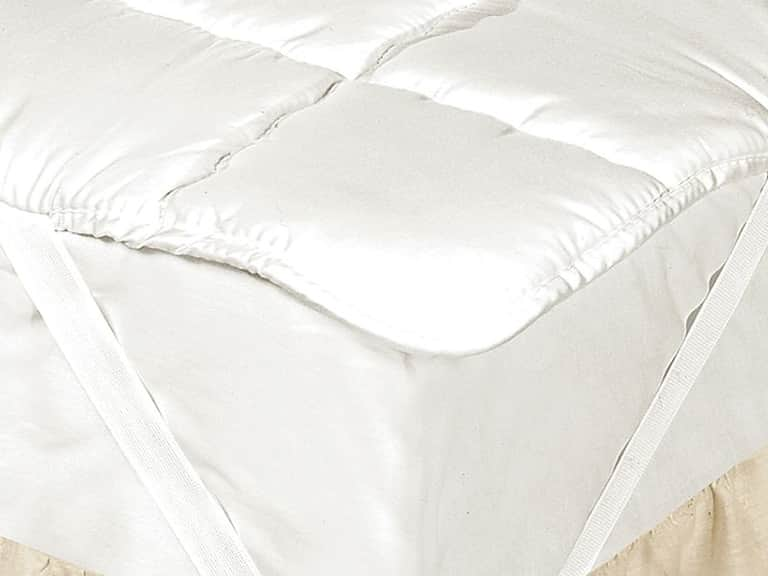
Stitch-through construction joins the top and bottom layers at intervals, forming pockets that help hold filling in place. It can be a practical option for lighter designs, although the stitched lines may create areas with less insulation than the filled compartments. Baffle-box construction uses internal walls to create deeper chambers, allowing loftier fills to expand more fully and helping reduce the risk of cold spots. Each method has trade-offs, and neither guarantees a particular level of comfort without considering the fill and design.
Check whether the product description explains the pattern, the size of the compartments and how the fill is secured. Also look at the shell fabric. A tightly woven cover can help contain fine fill, while a softer or more breathable shell may contribute to a different surface feel. Seams should be finished cleanly, with no obvious gaps through which filling could escape.
Corner loops or ties can make a practical difference when the insert is used with a cover. These small details help maintain alignment through the night and make it easier to put the bedding together. For a wide bed, a comforter that shifts towards one edge can leave the opposite sleeper short of coverage, so stability is part of fit as well as appearance.
Care is part of the choice
A comforter is a long-term part of the bedding wardrobe, and its care routine should be realistic for your household. Before choosing, check whether the item can be machine washed, whether it requires a large-capacity machine, or whether spot cleaning and professional care are recommended. A king-size comforter may be too bulky for an ordinary domestic washer even when its materials are technically washable.
If the comforter is intended to be used inside a cover, wash the cover regularly according to its care label and air the insert when suitable. The cover reduces direct contact with body oils and everyday dust, but it does not remove the need to follow the insert’s cleaning guidance. Never assume that a comforter can be washed in the same way as sheets or a duvet cover.
For down or other delicate fills, drying thoroughly is important. Retained moisture can affect the material and lead to an unpleasant smell. If the care instructions recommend professional cleaning, choose a provider experienced with filled bedding and follow the manufacturer’s guidance. For storage, use a clean, dry, breathable bag where possible; sealing natural-fibre bedding in a way that traps moisture is best avoided.
Care needs also connect to construction. A comforter that is difficult to wash may benefit from a protective cover and regular airing, while a washable synthetic option may be more convenient for some households. Consider the time, equipment and expense involved before settling on a material. Luxury is not only a first impression: it includes how comfortably an item fits into everyday life.
A practical checklist before you choose
Use this short checklist to compare king-size comforters on more than appearance:
- Measure the bed: Record mattress width, length and depth, including a topper or pad.
- Decide on the drape: Choose how far you want the comforter to fall at the sides and foot of the bed.
- Confirm finished dimensions: Compare measurements in centimetres or inches rather than relying on the king-size label.
- Check cover compatibility: Match the insert and cover dimensions, and look for ties or loops to secure them together.
- Read the fill composition: Find out whether the comforter contains down, feathers, wool, silk, synthetic fibres or a blend.
- Assess warmth and weight: Use the stated warmth guidance where available, then consider your room and personal preference.
- Review construction: Look for stitching or baffles that help keep the fill evenly distributed.
- Understand care: Check washing, drying, airing and storage requirements before buying.
- Consider sharing: Allow for how two people use the bed and whether both need the same level of warmth.
A confident choice is rarely about one specification in isolation. Dimensions establish how the comforter sits; fill and construction shape its feel; warmth determines how it performs in the room; care affects how practical it is to live with. Looking at these elements together makes it easier to choose bedding that feels considered rather than simply oversized.
Common king-size comforter mistakes
Assuming the label is a measurement. A king label is useful for narrowing options, but it cannot replace checking the finished dimensions. Compare the stated measurements with the bed before deciding.
Forgetting mattress depth. A thick mattress or topper reduces the visible drop of a comforter. Measure the full sleeping surface and think about how the bed is dressed.
Buying an insert and cover as if they were a set. Even if both are called king, they may not have matching dimensions. Check both and confirm that their attachment details are compatible.
Choosing warmth by season alone. A cold month does not necessarily mean a heavy comforter is right for every bedroom. Heating, personal temperature preference and the layering system all influence comfort.
Confusing loft with heat. A fluffy appearance may suggest cosiness, but loft does not tell you the whole story. Consider fill type, fill quantity, construction and the product’s warmth guidance.
Overlooking laundry capacity. A large comforter can be difficult to clean at home. Make sure its care instructions and size are compatible with the facilities available to you.
The finishing touch: proportion and texture
Once practical choices are settled, consider how the comforter sits within the wider bedroom. A smooth cotton cover can create a clean, tailored surface; linen introduces a relaxed texture; jacquard can add pattern and depth without relying on bold colour. These are choices of feel and style, not substitutes for checking the insert’s size or warmth.
On a king bed, understated details can have considerable presence. A well-proportioned drape, a cover that stays in place and a surface that feels comfortable against the skin create a quieter kind of luxury. The bed need not be overfilled with layers to look complete. A comforter that fits correctly and suits the sleeper’s needs provides the most convincing foundation.
Choose the dimensions first, then refine the decision through fill, construction, warmth and care. That order helps prevent a beautiful-looking purchase from becoming a poor fit. With measurements in hand and a clear sense of how you sleep, a king-size comforter can bring together generous coverage, practical comfort and a polished finish.
Frequently asked questions
Are all king-size comforters the same size?
No. Size labels are not a reliable substitute for exact measurements. Compare the finished width and length with your mattress and preferred drape before choosing.
Should a king-size comforter hang over the sides?
Usually, some overhang helps cover the mattress sides, but the ideal amount depends on mattress depth, bed height and personal style. Measure the bed and decide how much drop you want rather than choosing by convention.
How do I choose between down and down-alternative fill?
Compare the specific comforter’s warmth, weight, construction and care instructions. Down is often selected for its loft and light feel, while alternatives vary in their materials and maintenance needs. Personal preferences and sensitivities should guide the decision.
Do the duvet cover and comforter need to be exactly the same size?
They should be compatible. A cover that is much smaller can compress the insert, while a much larger one can allow it to shift. Check both sets of measurements and look for interior ties or loops.
Is a heavier comforter always warmer?
Not necessarily. Weight, loft and warmth are related but distinct qualities. Fill material, fill quantity and construction influence the finished feel, so use product-specific warmth information and consider your bedroom temperature and preferences.