Bedding · A practical guide
A UK Guide to High-End Cotton Bedding: Weaves, Feel and Care
Good cotton bedding is a pleasure you notice in the quietest way: the cool, clean touch of percale as you turn down the bed, or the fluid smoothness of sateen settling softly over a duvet. In premium bedding, the difference is not simply a matter of thread count or price. Fibre quality, yarn preparation, weave, finishing and everyday care all shape how a fabric feels—and how gracefully it wears.
For UK households, where bedrooms can move from centrally heated and dry to cool and damp with the seasons, choosing well means looking beyond a beautiful first impression. This guide explains the details that matter, from cotton fibre length to washing temperatures, so you can find high-end cotton bedding that suits both your preferred feel and your routine.
Start with the sensation you want
Before considering labels, imagine the bed you want to climb into. Do you prefer a crisp, breathable surface that feels freshly made, or a smoother, more enveloping fabric with a gentle lustre? These are useful starting points because the weave—the way the yarns cross one another—has a strong influence on a cotton textile’s surface and drape.
Percale and sateen are the two cotton weaves most often encountered in luxury sheets and duvet covers. Neither is inherently superior. They create different experiences, and the best choice depends on personal preference, how warm you tend to feel at night, and the atmosphere you want your bedroom to convey.
It is also worth remembering that the cover and the duvet insert perform different roles. A cotton cover contributes to the feel against the skin and can be laundered regularly; the insert provides much of the bed’s insulation. A breathable cover cannot compensate for an insert that is too warm for the room, but it can make the overall bedding feel more comfortable and manageable.
Percale: crisp, cool and quietly composed
Cotton percale uses a straightforward one-over, one-under plain weave. The balanced construction gives the fabric a matte appearance and a characteristically crisp hand. It is often associated with classic hotel bedding: neat, fresh-looking and unfussy. The surface tends to feel cool and dry rather than slippery, with enough structure to sit cleanly across a mattress or duvet.
That crispness can be particularly appealing to sleepers who dislike a close, glossy surface or who often feel warm under the covers. The weave allows air to move through the cloth, although the final sense of coolness also depends on the yarn, fabric weight, finishing, room temperature and the rest of the bedding. Percale is not a temperature-control guarantee; it is simply one construction many people find light and breathable in use.
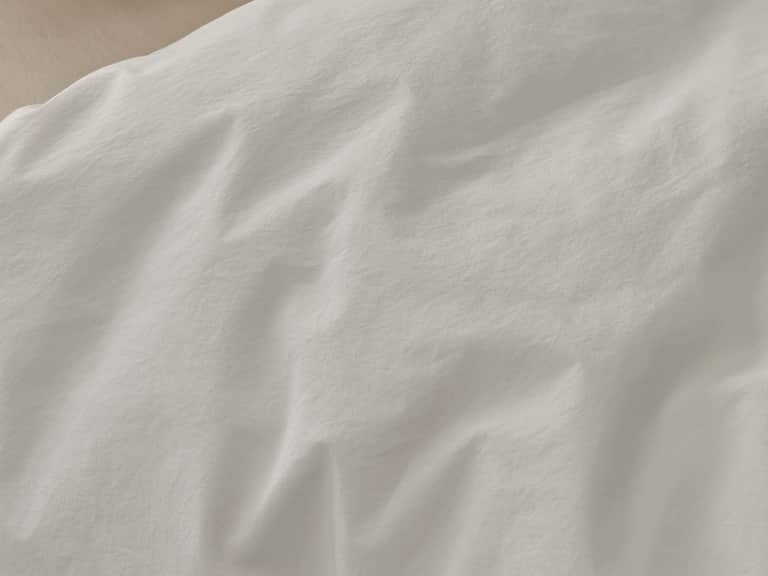
New percale may feel more structured than expected. With use and laundering, it can soften while retaining its characteristic matte finish. That gradual relaxation is part of its appeal: it becomes familiar without losing the crisp, tailored quality that distinguishes it from sateen.
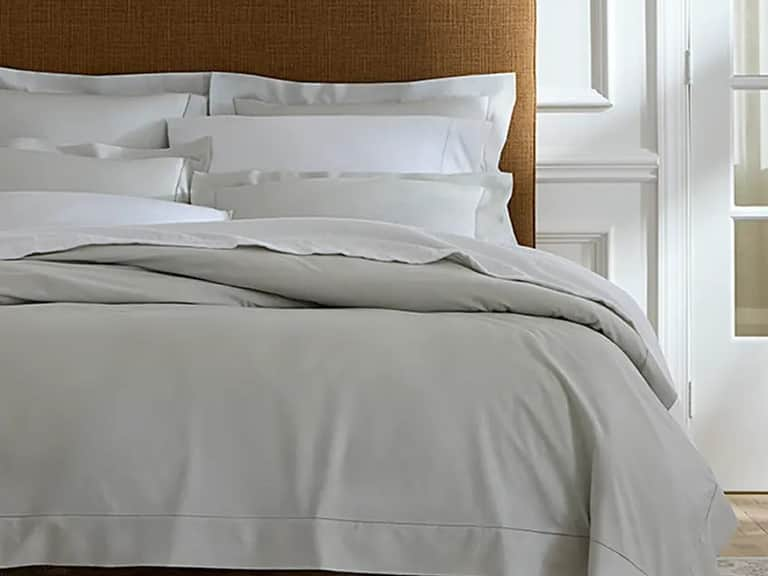
For a refined example of this look, the Luxor Duvet Cover is made from Egyptian cotton in a percale weave, with a lightweight feel, matte finish, flanges and hemstitching. These details illustrate how construction and finishing can give a simple cotton cover a particularly considered presence, without changing the essential character of percale.
Sateen: smooth, fluid and softly luminous
Sateen is woven with more yarns passing over the surface than beneath it. This arrangement creates a smoother face that reflects light with a subtle sheen. Cotton sateen often feels softer and more fluid than percale from the outset, with a graceful drape that lends the bed a more polished, softly dressed appearance.
Many people enjoy sateen for its supple, silky hand. Its surface can feel a little warmer or closer to the skin than percale, though individual impressions differ and fabric weight makes a difference. A lightweight sateen may feel airy; a denser version can seem more substantial. If you are choosing online, look for descriptions of weight and construction as well as the weave name.
The lustre of sateen works especially well with quiet colour, embroidery or printed design. The Millbrook Duvet Cover, for example, uses a printed sateen finish on long-staple cotton, combining a smooth hand and gentle sheen with a reversible ornamental pattern. It demonstrates how a weave can influence not only touch but also the way a design catches the light.
Sateen’s smoother surface may be more susceptible to snags than a sturdy plain weave, depending on yarn and construction. Treat it with care around jewellery, rough surfaces and sharp fastenings in the wash. This is not a reason to avoid it; it is a reminder that a beautiful finish benefits from considered handling.
Cotton quality: fibre length, yarn and fabric weight
The phrase “high-end cotton” can refer to several things, and no single label tells the whole story. Fibre length is one useful consideration. Longer cotton fibres can be spun into smoother, stronger yarns with fewer exposed ends, which may contribute to a refined feel and help the fabric withstand regular use. Terms such as long-staple and extra-long-staple describe fibre characteristics, but the finished result still depends on how the yarn is spun, woven and finished.
Country-of-origin descriptions can provide context, but they are not a complete quality assessment. Cotton grown in a particular region does not, by itself, guarantee a particular softness or lifespan. The finished cloth’s yarn quality, construction, finishing and care are all part of the picture. A useful product description should make clear what the fabric is made from and how it is constructed, rather than relying on a prestigious-sounding origin alone.
Fabric weight is another practical clue. A very light cotton may feel airy and drape delicately, while a heavier cloth can feel more substantial and structured. Weight is not a simple measure of quality: a lighter fabric may be deliberately designed for a cool, fluid finish, while a heavier one may suit someone who wants a more grounded feel. Consider how the bedding will sit in your room and how it feels in your hands, if you can handle a sample.
Construction details deserve attention, too. Strong seams, carefully finished hems and secure closures can make a cover easier to use and maintain. Interior ties or other attachment points help keep the duvet insert aligned, while a well-finished edge can preserve the bedding’s neat appearance after repeated washing. These small decisions are less conspicuous than a sheen or embroidery, but they matter in daily use.
Thread count: one detail, not the verdict
Thread count is the number of threads described within a measured area of fabric, though counting conventions can vary. It is often treated as a shorthand for luxury, but a higher number does not automatically mean softer, stronger or more comfortable bedding. The quality of the cotton, the yarn, the weave and the finishing all influence the result.
Thread count is also best understood in the context of weave. Percale and sateen have different structures and surface characteristics; comparing their numbers without considering those differences can be misleading. A well-made, moderate-count fabric can be more pleasing and durable than a higher-count textile made with less carefully selected yarn or finishing.
Rather than pursuing the largest figure on a label, ask what the fabric is made from, how it is woven and whether the care instructions suit your home. A credible description gives you useful information without asking one specification to stand in for the entire experience.
Finishing touches that change the character
Finishing describes processes applied after weaving that can influence a fabric’s appearance, handle and performance. A smooth finish may heighten sateen’s lustre; a garment-dyed finish gives colour a distinctive, sometimes softly varied quality. Embroidery, hemstitching, flanges and piping are decorative details, but they also affect how a cover frames the bed and how it should be laundered.
For a pared-back, lived-in look, the Nite Duvet Cover offers a different expression of cotton: it is garment-dyed, lightweight and described as easy to maintain, with machine washing at 40°C in its care guidance. Its informal colour character contrasts with the tailored finish of a crisp percale cover or an embroidered sateen design.
Details should be considered alongside your household’s habits. A decorative edge may call for a gentler wash or careful ironing; a simple finish may be easier to manage when bedding is changed frequently. If the cover will be used every day, practicality is part of its luxury. The most elegant choice is often the one that remains beautiful without demanding an unrealistic routine.
Choose for your room and your routine
In the UK, indoor temperatures can vary considerably between homes and across the year. A cool bedroom, a warm upstairs room, a draughty period property and a well-insulated flat may call for different combinations of cover and duvet. Think about the room in which the bedding will be used, whether windows are left open, how much heating is typically used at night, and whether you tend to sleep warm or cool.
If you prefer a crisp, matte surface or often feel warm, percale may be an appealing place to begin. If you favour a smooth hand and a little sheen, sateen may feel more inviting. Those who share a bed but have different preferences can sometimes find balance by selecting a versatile cover and adjusting the insert or additional layers separately.
Colour and pattern matter because bedding occupies a large visual area. Neutral cotton can make a room feel calm and considered, while a printed or embroidered cover brings a more expressive note. The surface of the fabric changes how colour reads: a matte percale can look clean and understated, while sateen’s light reflection may lend a shade extra depth.
Before ordering, check the dimensions against the duvet and bed rather than relying only on a familiar size name. UK bedding sizes are not always interchangeable with sizes used elsewhere. Confirm the cover’s measurements, the insert dimensions and the closure style, especially when buying from an international collection. A carefully chosen fabric will not look or feel its best if the cover is a poor fit.
Care begins with the label
Care instructions are not an afterthought. They are part of the fabric’s practical identity, and they can vary by fibre, dye, weave, embroidery and finishing. Always follow the sewn-in care label or the manufacturer’s current guidance: a general rule cannot account for every textile treatment.
For many cotton covers, washing with a mild detergent on an appropriate cycle is a sensible routine, but the recommended temperature varies. Some fabrics specify a warm wash; others call for a cooler or delicate cycle. Avoid assuming that all cotton can be treated identically. A printed design, a garment-dyed finish or decorative stitching may need more careful handling than a plain, robust fabric.
Before washing, fasten buttons or zips, turn patterned or embroidered pieces inside out where the care instructions allow, and avoid overcrowding the machine. Washing bedding separately from items with hooks, rough fastenings or abrasive textures can help reduce snags. Do not use bleach or fabric softener unless the label explicitly permits it; these products can affect colour, fibre feel or absorbency depending on the textile.
Drying matters just as much. Tumble-drying on a low setting may be permitted for some cotton bedding, while other pieces benefit from line drying or removal while slightly damp. Excessive heat can encourage shrinkage, creasing or wear. In a typical UK home, allow enough space for bedding to dry thoroughly, especially during cooler, more humid weather. Storing fabric before it is completely dry can leave it smelling stale.
Ironing is a matter of preference as well as care. If the label permits it, ironing while the fabric is slightly damp can make creases easier to smooth. Percale is often chosen for its crisp look, but a naturally relaxed finish may suit a less formal bedroom. Sateen’s drape can appear polished without demanding a perfectly pressed surface. The aim is not to make everyday bedding look untouched; it is to keep it clean, comfortable and well cared for.
A simple care rhythm for longer use
A removable duvet cover helps protect the insert from everyday contact and makes regular laundering more straightforward. How often to wash bedding depends on personal preference, household conditions and the care label. Those with allergies, pets, or a tendency to perspire may prefer a more frequent routine. Whatever the schedule, prompt attention to spills and careful drying help keep cotton fresh.
- Check the care label before the first wash, particularly for dyed, printed or embroidered fabrics.
- Use a suitable cycle and avoid overloading the washing machine.
- Keep bedding away from rough fastenings that could catch or pull the weave.
- Dry thoroughly and follow the stated heat guidance to reduce avoidable wear.
- Store clean bedding in a dry, ventilated place, rather than sealing it away while damp.
These modest habits are more useful than trying to make a fabric last through a rigid, one-size-fits-all routine. Luxury bedding is designed to be lived with. Sensible washing preserves its appearance while allowing the cotton to become part of the familiar comfort of the room.
A considered checklist before you choose
When comparing high-end cotton bedding, read the full description rather than stopping at the headline material or thread count. The following questions can help turn a beautiful product page into a practical decision:
- Which surface do you prefer? Percale is generally crisp and matte; sateen is generally smoother and more lustrous.
- What does the description say about the cotton? Look for clear fibre and yarn information, while treating origin claims as context rather than a complete quality guarantee.
- How substantial should the fabric feel? Check weight where it is provided and consider whether you prefer a light drape or a more structured hand.
- Are the finishing and fastening details right for you? Consider hems, embroidery, buttons, zips and internal ties.
- Can you care for it as instructed? Confirm wash temperature, cycle, drying method and ironing guidance before deciding.
- Will it fit your duvet? Compare exact measurements, particularly when the bedding is made to a sizing system outside the UK.
The enduring appeal of well-made cotton
High-end cotton bedding is not defined by conspicuous decoration. Its appeal lies in the relationship between fibre and form: a surface that feels right against the skin, a weave that suits the sleeper, a finish that gives the bed its character and a construction that stands up to ordinary use. These qualities are often easiest to appreciate after the first impression has passed—when the fabric has been washed, used and made familiar.
Choose percale for its crisp restraint or sateen for a smoother, softly lit finish. Consider the cotton, fabric weight and construction, but do not let a single number decide for you. Above all, read the care label before committing. The best bedding is not simply beautiful on the day it arrives; it is well suited to your room, your preferences and the rhythms of the home.
That is the quiet luxury of a considered set-up: cotton that feels inviting, a cover that works with the duvet beneath it, and a care routine simple enough to sustain season after season.